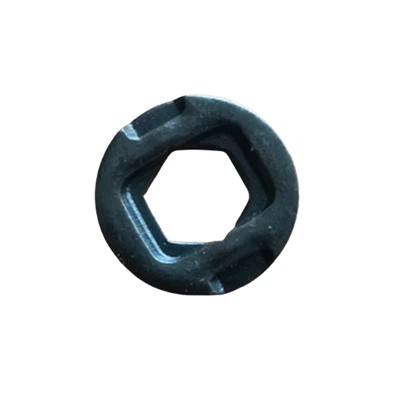
The standard size of a compression spring washer is a topic of significant importance in various industries, especially for those involved in mechanical engineering, automotive, and manufacturing sectors. As a leading supplier of compression spring washers, I understand the critical role these components play in ensuring the proper functioning of different machinery and equipment.
Understanding Compression Spring Washers
Compression spring washers are designed to provide a spring force when compressed between two surfaces. They are commonly used to prevent loosening of nuts and bolts due to vibrations or other external forces. These washers are made from materials such as stainless steel, carbon steel, and phosphor bronze, each offering different levels of strength, corrosion resistance, and elasticity.
Factors Influencing Standard Sizes
Several factors determine the standard size of a compression spring washer. The most important ones include the load requirements, the size of the fastener, and the application environment.
Load Requirements
The load that the spring washer needs to withstand is a crucial factor in determining its size. Higher loads typically require larger and thicker washers. For example, in heavy - duty machinery, where large forces are involved, a thicker and wider compression spring washer may be necessary to provide the required spring force.
Fastener Size
The size of the fastener, such as the diameter of the bolt or nut, also influences the size of the spring washer. The inner diameter of the washer must match the diameter of the fastener to ensure a proper fit. If the inner diameter is too small, it may not fit over the fastener, while if it is too large, it may not provide the necessary spring force.
Application Environment
The environment in which the compression spring washer is used can also affect its size. In corrosive environments, a washer made of a corrosion - resistant material may be required, and its size may need to be adjusted to accommodate the specific properties of that material. For instance, stainless steel washers may be thicker or have a different shape compared to carbon steel washers to provide the same level of performance in a corrosive setting.
Common Standard Sizes
In the market, there are several common standard sizes for compression spring washers. These sizes are typically specified by international standards organizations such as the International Organization for Standardization (ISO) and the American National Standards Institute (ANSI).
ISO Standards
ISO standards provide a comprehensive set of specifications for compression spring washers. For example, ISO 7093 specifies the dimensions, tolerances, and mechanical properties of spring washers. The standard covers a range of sizes, with inner diameters ranging from a few millimeters to several centimeters.
ANSI Standards
ANSI standards also play an important role in defining the standard sizes of compression spring washers in the United States. ANSI B18.21.1 provides detailed information on the dimensions and properties of various types of washers, including compression spring washers.
Custom - Made Sizes
While there are standard sizes available, many applications require custom - made compression spring washers. As a supplier, we often receive requests for washers with non - standard sizes to meet the specific needs of our customers. Custom - made washers can be designed to fit unique fasteners, handle special loads, or operate in specific environments.
Comparison with Related Components
Compression spring washers are often used in conjunction with other components such as Stop Plate and Air Disc Brake Gland Cap. These components work together to ensure the proper functioning of a system. For example, in a pneumatic disc brake system, the compression spring washer may be used to provide the necessary pre - load on the brake pads, while the stop plate helps to limit the movement of the brake components, and the air disc brake gland cap protects the internal parts from dust and moisture.
Importance of Correct Sizing
Using the correct size of compression spring washer is crucial for the performance and safety of the equipment. An undersized washer may not provide enough spring force, leading to loosening of the fasteners and potential failure of the system. On the other hand, an oversized washer may not fit properly or may cause excessive stress on the surrounding components.
Our Role as a Supplier
As a compression spring washer supplier, we are committed to providing high - quality products that meet the specific needs of our customers. We have a wide range of standard sizes in stock, and we also offer custom - made solutions. Our team of experts can help customers select the right size of compression spring washer based on their requirements.


Quality Assurance
We implement strict quality control measures to ensure that our compression spring washers meet the highest standards. Our products are tested for strength, elasticity, and corrosion resistance. We also provide detailed technical specifications and certificates to guarantee the quality of our products.
Contact Us for Purchase and Negotiation
If you are in need of compression spring washers, whether standard or custom - made, we invite you to contact us for purchase and negotiation. Our team is ready to assist you in finding the most suitable solution for your application. We understand the importance of timely delivery and competitive pricing, and we will work closely with you to meet your needs.
References
- International Organization for Standardization (ISO). ISO 7093.
- American National Standards Institute (ANSI). ANSI B18.21.1.