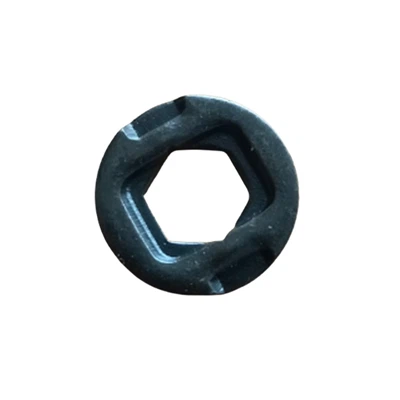
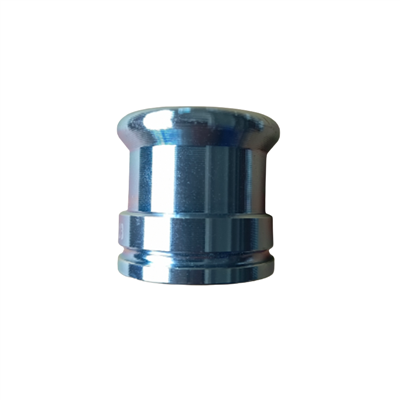
Can a stainless steel cone be used in cryogenic environments? This is a question I get asked a lot as a supplier of Stainless Steel Cone. Cryogenic environments, which typically involve extremely low temperatures, are used in a variety of industries, from medical research to space exploration. So, let's dive into whether stainless steel cones are up for the task.
Properties of Stainless Steel
First off, we need to understand what stainless steel is all about. Stainless steel is an alloy made up of iron, chromium, and often other elements like nickel and molybdenum. The chromium in stainless steel forms a thin, protective oxide layer on the surface, which gives it its corrosion - resistant properties.
When it comes to low - temperature performance, stainless steel has some great features. Most types of stainless steel have good ductility at cryogenic temperatures. Ductility means the ability of a material to deform under tensile stress without breaking. This is crucial in cryogenic environments because as the temperature drops, materials can become brittle. But stainless steel can maintain a certain level of flexibility, which helps it withstand the stresses that come with extreme cold.
Advantages of Using Stainless Steel Cones in Cryogenic Environments
Corrosion Resistance
In cryogenic applications, there's often a risk of corrosion due to the presence of moisture or other reactive substances. Since stainless steel is highly corrosion - resistant, a stainless steel cone can last a long time in these harsh conditions. For example, in a medical cryogenic storage facility, where liquid nitrogen is used to store biological samples, the cone won't rust or corrode easily, ensuring the integrity of the equipment.
Strength and Durability
Stainless steel cones can maintain their strength even at very low temperatures. This is important because in cryogenic systems, the components need to be able to withstand pressure changes and mechanical stresses. Whether it's in a cryogenic pipeline or a storage tank, a stainless steel cone can hold up under the load, reducing the risk of failure.
Compatibility with Other Materials
Stainless steel is generally compatible with other materials commonly used in cryogenic systems. It can be easily combined with Stainless Steel Ferrule and Compression Ferrule to create reliable connections. These ferrules help in sealing and centering the cone, and the compatibility between them ensures a leak - free and stable system.
Challenges and Considerations
Thermal Contraction
One of the main challenges when using stainless steel cones in cryogenic environments is thermal contraction. As the temperature drops, stainless steel will contract. This can cause issues if the cone is part of a larger system where precise dimensions are required. For example, in a cryogenic valve, the contraction of the cone might affect the sealing performance. To address this, engineers need to carefully design the system to account for thermal contraction, perhaps by using expansion joints or allowing for some play in the assembly.
Austenitic vs. Ferritic Stainless Steel
There are different types of stainless steel, and their performance in cryogenic environments can vary. Austenitic stainless steels, which contain a high amount of nickel, are generally more suitable for cryogenic use because they have better ductility at low temperatures. Ferritic stainless steels, on the other hand, can become brittle at cryogenic temperatures and may not be the best choice for applications where impact resistance is important.
Real - World Applications
Medical Industry
In the medical field, cryogenic storage is used to preserve biological samples such as sperm, eggs, and stem cells. Stainless steel cones are used in the design of cryogenic storage containers and transfer systems. They help in ensuring a proper seal and flow of liquid nitrogen, which is essential for maintaining the low temperatures required for sample preservation.


Aerospace Industry
The aerospace industry also makes use of cryogenic technology, especially in rocket engines. Liquid oxygen and liquid hydrogen are used as propellants, and these are stored and transferred at extremely low temperatures. Stainless steel cones are used in the fuel delivery systems to ensure a reliable and leak - free connection between different components.
Testing and Quality Assurance
Before a stainless steel cone can be used in a cryogenic environment, it needs to go through rigorous testing. This includes testing for mechanical properties at low temperatures, such as tensile strength, impact resistance, and ductility. Non - destructive testing methods, like ultrasonic testing and magnetic particle testing, are also used to detect any internal defects in the cone.
As a supplier, we take quality assurance very seriously. We work closely with our customers to understand their specific requirements and ensure that the cones we provide meet or exceed the necessary standards for cryogenic applications.
Conclusion
So, can a stainless steel cone be used in cryogenic environments? The answer is yes, but with some considerations. Stainless steel has many advantages in terms of corrosion resistance, strength, and compatibility, but thermal contraction and the type of stainless steel used need to be carefully evaluated.
If you're in the market for stainless steel cones for cryogenic applications, we're here to help. We have a wide range of products and can provide customized solutions to meet your specific needs. Whether you're in the medical, aerospace, or any other industry that requires cryogenic technology, we can work with you to ensure you get the right stainless steel cone for your project. Contact us to start a discussion about your procurement needs and let's find the best solution together.
References
- ASM Handbook, Volume 2: Properties and Selection: Nonferrous Alloys and Special - Purpose Materials.
- Cryogenic Engineering by Richard Barron.
- Standards and guidelines from relevant industry organizations such as ASTM and ISO.