Can a straight connector be used in a high - speed data transmission system?
In the rapidly evolving landscape of technology, high - speed data transmission has become the cornerstone of modern communication. Whether it's in data centers, telecommunications networks, or consumer electronics, the demand for faster and more reliable data transfer is insatiable. As a straight connector supplier, I often get asked about the suitability of straight connectors in high - speed data transmission systems. In this blog, I will delve into this topic and provide a comprehensive analysis.
Understanding Straight Connectors
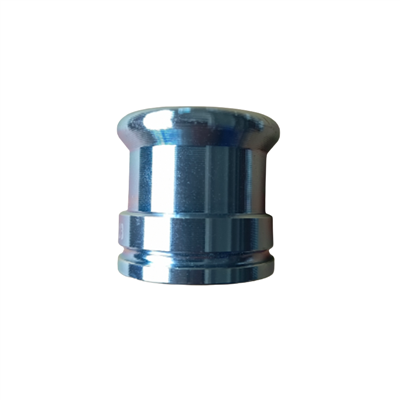
Straight connectors are simple yet essential components in electrical and electronic systems. They are designed to join two cables or components in a straight line, providing a direct connection. There are various types of straight connectors available in the market, each with its own set of features and applications. For example, the Galvanized Downpipe Coupling is commonly used in plumbing and drainage systems, while the Hydraulic Straight Connector is suitable for hydraulic systems. In the context of data transmission, Straight Connector Fitting is often considered for its ability to provide a straightforward connection between cables.


Requirements of High - Speed Data Transmission Systems
High - speed data transmission systems have strict requirements in terms of signal integrity, bandwidth, and reliability. Signal integrity refers to the ability of a signal to remain undistorted as it travels through a transmission medium. In high - speed applications, even minor signal distortions can lead to data errors and reduced performance. Bandwidth is another crucial factor, as it determines the amount of data that can be transmitted within a given time frame. High - speed systems typically require connectors that can support large bandwidths to ensure smooth data flow. Additionally, reliability is of utmost importance, as any interruption in data transmission can have significant consequences.
Advantages of Using Straight Connectors in High - Speed Data Transmission
One of the main advantages of using straight connectors in high - speed data transmission is their simplicity. Straight connectors provide a direct and uncomplicated connection, which can minimize signal reflections and losses. Signal reflections occur when a signal encounters an impedance mismatch in the transmission path, causing part of the signal to bounce back. These reflections can interfere with the original signal and degrade its quality. Straight connectors, with their straightforward design, can help reduce the likelihood of such impedance mismatches and thus improve signal integrity.
Another advantage is the ease of installation. Straight connectors are relatively easy to install compared to more complex connector types. This can save time and labor costs during the installation process, especially in large - scale data centers or telecommunications networks. Moreover, straight connectors are often more compact, which can be beneficial in applications where space is limited.
Challenges and Limitations
Despite their advantages, straight connectors also face some challenges and limitations in high - speed data transmission. One of the primary concerns is the potential for electromagnetic interference (EMI). As data transmission speeds increase, the risk of EMI also rises. EMI can cause signal degradation and interference, leading to data errors. Straight connectors may not provide the same level of EMI shielding as some specialized connector types, which can be a drawback in high - speed applications.
Another limitation is the limited flexibility. Straight connectors are designed to provide a fixed, straight connection, which may not be suitable for applications that require more flexibility in cable routing. In some cases, the rigid nature of straight connectors can make it difficult to install cables in tight spaces or around obstacles.
Mitigating the Challenges
To overcome the challenges associated with using straight connectors in high - speed data transmission systems, several strategies can be employed. One approach is to use shielding techniques. By adding shielding materials to the straight connectors, the level of EMI can be significantly reduced. This can help improve signal integrity and ensure reliable data transmission.
Another strategy is to optimize the connector design. By carefully selecting the materials and dimensions of the straight connectors, the impedance characteristics can be improved, reducing the likelihood of signal reflections. Additionally, advanced manufacturing techniques can be used to ensure high - precision production, which can further enhance the performance of the connectors.
Case Studies
To illustrate the practical application of straight connectors in high - speed data transmission systems, let's look at a few case studies. In a large - scale data center, straight connectors were used to connect servers to the network switches. Despite the high - speed data transfer requirements, the straight connectors provided a reliable and cost - effective solution. By using shielding techniques and optimizing the connector design, the signal integrity was maintained, and data errors were minimized.
In another case, a telecommunications company used straight connectors in a fiber - optic network. The simplicity and ease of installation of the straight connectors allowed for quick deployment of the network, while the performance of the connectors met the high - speed data transmission requirements.
Conclusion
In conclusion, straight connectors can be used in high - speed data transmission systems, but they come with both advantages and challenges. Their simplicity, ease of installation, and compact design make them an attractive option in many applications. However, the potential for EMI and limited flexibility need to be carefully considered. By employing appropriate mitigation strategies, such as shielding and design optimization, the performance of straight connectors in high - speed data transmission can be significantly improved.
If you are interested in exploring the use of straight connectors for your high - speed data transmission needs, I encourage you to contact us for a detailed discussion. We can provide you with the right solutions based on your specific requirements and help you make an informed decision.
References
- Smith, J. (2020). High - Speed Data Transmission: Principles and Practices. New York: Tech Publishing.
- Johnson, A. (2019). Connector Technology for Modern Communication Systems. London: Comm Books.